
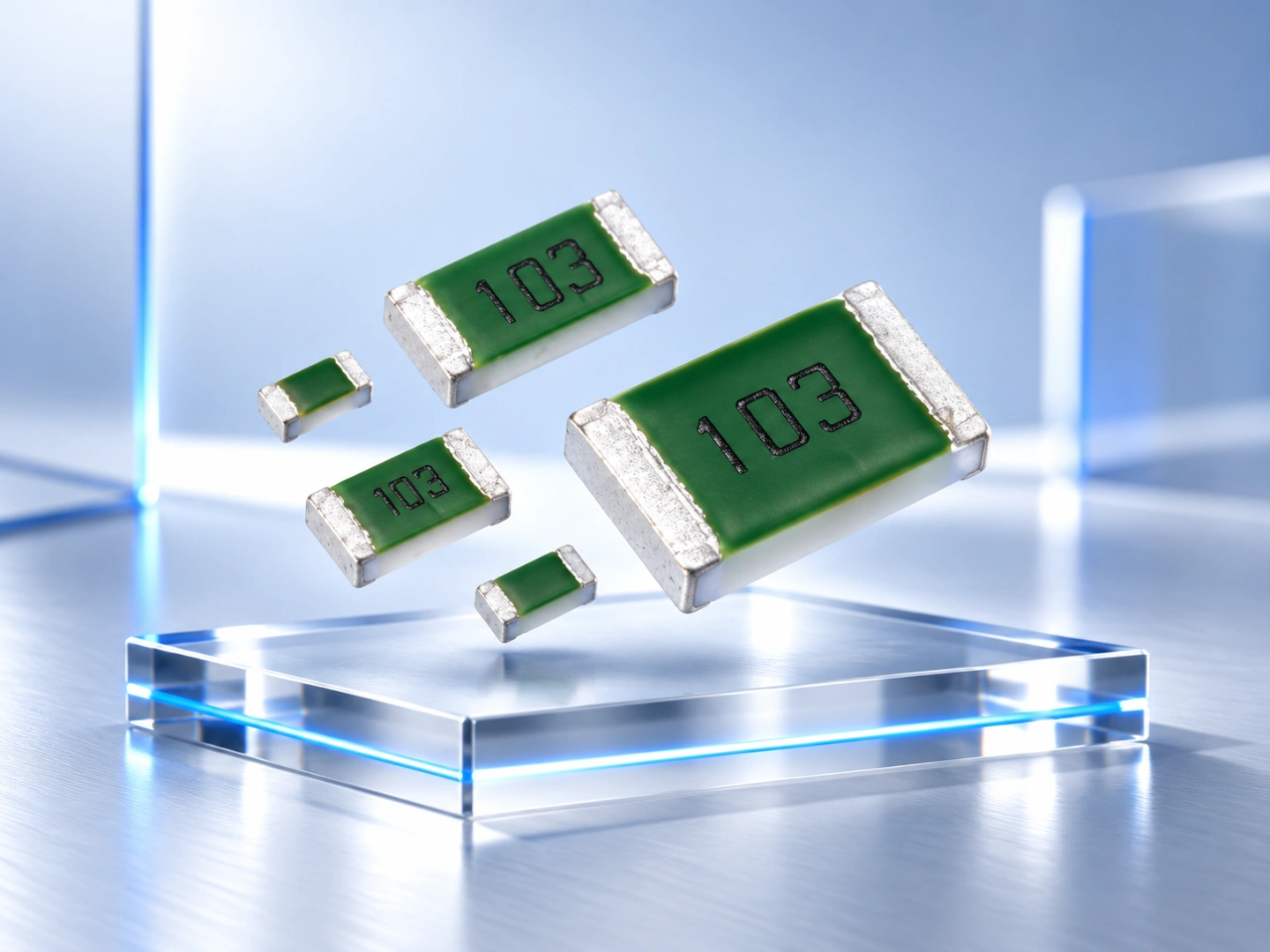
Resistors for Development and Mass Production
Resistors for Professionals
Are you developing a new device, planning a redesign, or looking for a suitable alternative for an existing application? We support you in finding technically and economically suitable resistors.
Whether precision resistors, shunt resistors, power resistors, high-voltage resistors, or pulse-resistant versions: we consider not only the resistance value but also requirements for power, tolerance, temperature coefficient, design, and thermal behavior.
From the initial selection and samples to technical coordination and mass production supply, we accompany your projects personally and with a practical approach.
For Diverse Requirements
As a distribution partner of KOA, we offer you access to a broad portfolio of resistors for industrial and demanding electronic applications.
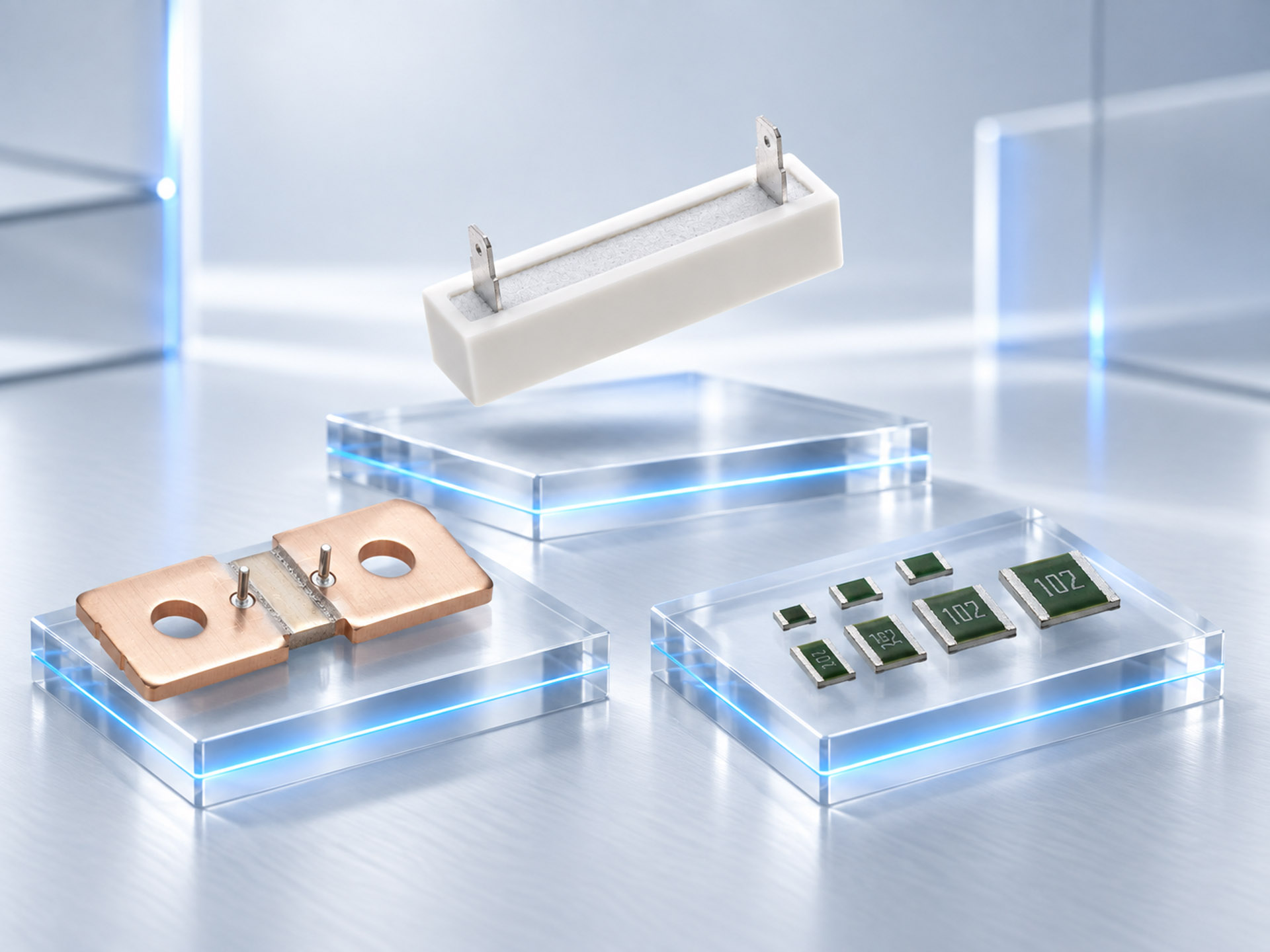
The spectrum ranges from classic SMD and leaded resistors to high-precision thin-film and robust thick-film solutions, as well as shunts, wide-terminal versions, resistor networks, and components for high voltages or pulse loads.
Which technology and series is best suited depends on your application. We assist you with technical classification and selection and, if necessary, coordinate special requirements directly with KOA.
More Than Just Catalog Selection
Selecting Suitable Components
Resistance value and size are only part of the specification. We take into account power, tolerance, temperature coefficient, pulse load, and thermal requirements of your application, among other factors.
Fast Sample Availability
For development, testing, and approval, we support you in procuring suitable samples and alternatives – ensuring your project continues without unnecessary delays.
Direct Contact with the Manufacturer
From Development to Mass Production
Resistors for Automotive, Industry, and Power Electronics
In electronic circuits, resistors perform far more tasks than just limiting current. Depending on the design, they serve, among other things, for current measurement, voltage division, signal processing, or power limitation, and must meet very different electrical, thermal, and mechanical requirements.
The areas of application are correspondingly diverse: from automotive and e-mobility to industrial electronics and battery management, through to medical technology and power electronics.
For the reliable function of an application, the nominal resistance value is therefore not the only decisive factor. Tolerance, temperature coefficient, rated power, dielectric strength, pulse resistance, long-term stability, and heat dissipation also play an important role in the selection.
Which Resistor Fits Your Application?
Do you already have a specific specification or are you still at the beginning of component selection? Torsten Cleve supports you with technical questions regarding resistors and helps you find a suitable solution for your project. Talk to us about your requirements.

Frequently Asked Questions About Resistors
Resistors
In thick-film SMD resistors, the actual resistive element consists of a paste based on ruthenium oxide (RuO₂). This is applied to a ceramic aluminum oxide substrate using a screen-printing process and then fired. The layer thickness is typically between 10 and 14 µm. Since the paste is a mixture of conductive RuO₂ and non-conductive glass particles, the composition varies depending on the desired resistance value. The final resistance value is adjusted through laser trimming.
Thick-film resistors are designed for relatively high power ratings and are characterized by good ESD and pulse stability. This is their clear advantage over thin-film components. One disadvantage is the higher current noise: the granular structure of the paste affects signal quality, especially at high resistance values. Furthermore, the extraordinary long-term stability of thin-film series cannot be achieved with thick-film technology.
The KOA portfolio includes a wide variety of thick-film series—from standard types such as the RK73 to pulse-stable variants (SG73), high-voltage versions (HV73), and wide-terminal types with improved heat dissipation (WK73R), as well as shunt series with minimum values starting at 10 mΩ. With the new RS73 series, KOA also offers a thick-film solution with tolerances of ±0.1% and a TCR of ±25 ppm/K—values that were previously reserved for thin-film technology.
You can find more on this in our IVEC Insights article: SMD Resistors in Thick-Film and Thin-Film Technology
Thin-film resistors – also known as metal film resistors – are manufactured under cleanroom conditions. A very thin nickel-chromium (NiCr) layer is applied to the ceramic aluminum oxide substrate using a sputtering process. The layer thickness ranges between 10 and 100 nm – significantly thinner than thick-film. The final resistance structure is defined photolithographically; the precise resistance value is then adjusted by laser trimming.
The outstanding properties of thin-film technology are precision and long-term stability. Typical features include tight initial tolerances and very low temperature coefficients (TC). The metallic resistance element also exhibits significantly lower current noise than thick-film paste – a crucial advantage in applications where signals must be transmitted as undisturbed as possible.
KOA’s high-runner in the thin-film sector is the RN73 series (RN73R and RN73H) with initial tolerances up to ±0.05% and a TC of ±5 ppm/K. The RN73H is additionally equipped with an SiO₂ protective layer against moisture ingress, making it suitable for demanding automotive applications. For higher power requirements, the wide-terminal type WN73H is available. Special series such as the high-precision voltage divider RTY (SOT-23) or the high-voltage voltage divider networks HVD (up to 1000 V) and MHVD (up to 1500 V) complete the portfolio.
You can find more information in our IVEC-Insights article “SMD Resistors in Thick-Film and Thin-Film Technology”
The main difference lies in the construction of the resistive element. In thick-film resistors, a resistive paste is applied to a ceramic substrate. They are versatile and are characterized, among other things, by good pulse and ESD resistance.
Thin-film resistors, on the other hand, have a very thin metallic resistive layer. They typically offer tighter tolerances, low temperature coefficients, lower current noise, and high long-term stability. Therefore, they are frequently used in precision measurement and signal applications.
A shunt resistor—also known as a current sense resistor—is a very low-resistance resistor used to measure electrical currents. The current generates a defined voltage drop across the resistor, from which the actual current strength can be determined.
Typical applications include battery management systems, motor controls, charge controllers, frequency converters, and power electronics.
Beyond the required resistance value, key factors include tolerance, temperature coefficient, rated power, package size, voltage and pulse withstand capability, and thermal behavior.
Depending on the application, additional requirements such as long-term stability, moisture resistance, sulfur resistance, or automotive qualification may also be relevant.
Derating refers to the reduction of a resistor’s permissible power with increasing temperature. Beyond a specified temperature, a component can no longer be continuously operated at its full rated power.
The specific derating curve in the datasheet indicates which power is permissible at which temperature. For the reliable design of a circuit, this thermal load should be considered during component selection.
Ambient Temperature describes the ambient temperature of a component. In contrast, Terminal Part Temperature is measured directly at the terminals of the resistor.
Especially with SMD resistors, the component temperature can be significantly more representative, as a large portion of the generated heat is dissipated through the solder terminals and the printed circuit board. Therefore, the temperature concept used can influence the permissible power and derating.
Leaded resistors, or THT resistors, continue to be used when, for example, high mechanical stability, larger clearances on the PCB, or special requirements for power and dielectric strength are required.
Typical areas of application include industrial electronics, power electronics, high-voltage applications, prototypes, and certain small series.
With wide-terminal resistors, the larger terminal pads are located on the long sides of the component. This allows heat to be more efficiently dissipated through the terminals into the PCB.
This can enable a higher permissible power rating for the same package size and is particularly interesting for applications where space requirements and thermal load play a significant role.
Yes. We support you from the technical pre-selection of suitable resistors, through coordination with KOA, to the procurement of samples and subsequent series supply.
In doing so, we consider both the technical requirements of your application, as well as availability and economic framework conditions.