
Connection Technology for Development and Mass Production
Connection Technology for Professionals
From connectors and flat conductor connections to cable terminals and accessories: We support you in selecting reliable connection solutions for your application.
An electrical connection must do more than just fit – it must function reliably over the long term. Electrical load, installation space, mechanical stress, environmental conditions, and the assembly process all place very different requirements on the components used.
We support developers, purchasing, and product management in selecting suitable connectors, contacts, flat conductor connections, and connection technologies for new developments, re-designs, and mass production applications.
In doing so, we do not just look at individual components, but at the connection as a whole: from the contact and connector to the cable and terminal, all the way to processing.
From the initial selection to samples and technical coordination through to series supply, we accompany your project personally and with a practical approach.
For Secure and Reliable Connections
With ZeB ElektroTechnik, we offer you access to a versatile portfolio of components and technologies for electrical connection systems.
The product range includes, among others, tab and receptacle technology, flexible flat cables (FFC), cable lugs, cable glands, PCB connectors, board-to-board connections, connector systems, USB and SIM connectors, as well as heat-shrink and insulating tubing.
Furthermore, solutions for various connection technologies such as crimp, IDC, and screw terminals are available, along with matching tools and processing solutions.
Which connection is technically and structurally most suitable depends on your application. We support you in the selection and, if necessary, coordinate special requirements directly with ZeB and the respective manufacturers.
Ensuring the Connection Fits the Application
Select the Right Technology
Crimp, IDC, FFC, board-to-board, or screw terminal? We support you in selecting a suitable connection technology for your electrical and structural requirements.
Consider the Entire Connection
Connectors and mating connectors are only part of the solution. Cables, contacting, installation space, mechanical load, and processing must also work together.
Samples for Development and Testing
For prototypes, functional tests, and approvals, we support you in procuring suitable samples and components.
Direct Line to ZeB and Manufacturers
For special technical requirements, we handle the coordination with ZeB and the associated manufacturers and accompany your project through to series supply.
Connection Technology for Industry, Automotive, and Electronics
Reliable electrical connections are a fundamental requirement for permanently functioning electronic and electromechanical systems. Depending on the application, they must transmit high currents, forward signals reliably, or function safely even under mechanical and thermal loads.
The areas of application for connectors, PCB connectors, flat conductor connections, cable lugs, and contact systems are correspondingly diverse – from industrial electronics and automation to automotive applications and measurement, control, and medical technology.
When selecting a suitable connection solution, factors such as design, pitch, number of poles, contacting, wire cross-section, mounting type, mating cycles, installation space, and environmental conditions should be considered alongside electrical parameters.
Which Connection Fits Your Application?
Are you looking for a suitable connector, a solution for flexible flat conductors, or an alternative for an existing connection?
Robert and Torsten Cleve support you in selecting suitable components and connection technologies – from the first technical question to mass production application.
Talk to us about your requirements.

Frequently Asked Questions About Connection Technology
Interconnect Technology
This depends, among other factors, on current and voltage, signal type, number of poles, available installation space, conductor cross-section, mechanical stress, and environmental conditions.
Assembly and manufacturing processes also play a significant role. We assist you in classifying these requirements and comparing suitable connection technologies.
Connectors are differentiated by their application area, design, and connection technology, among other factors.
Our portfolio includes, for example, PCB connectors, board-to-board connectors, flat connector systems, FFC connections, and USB and SIM connectors.
The appropriate version depends on the specific application.
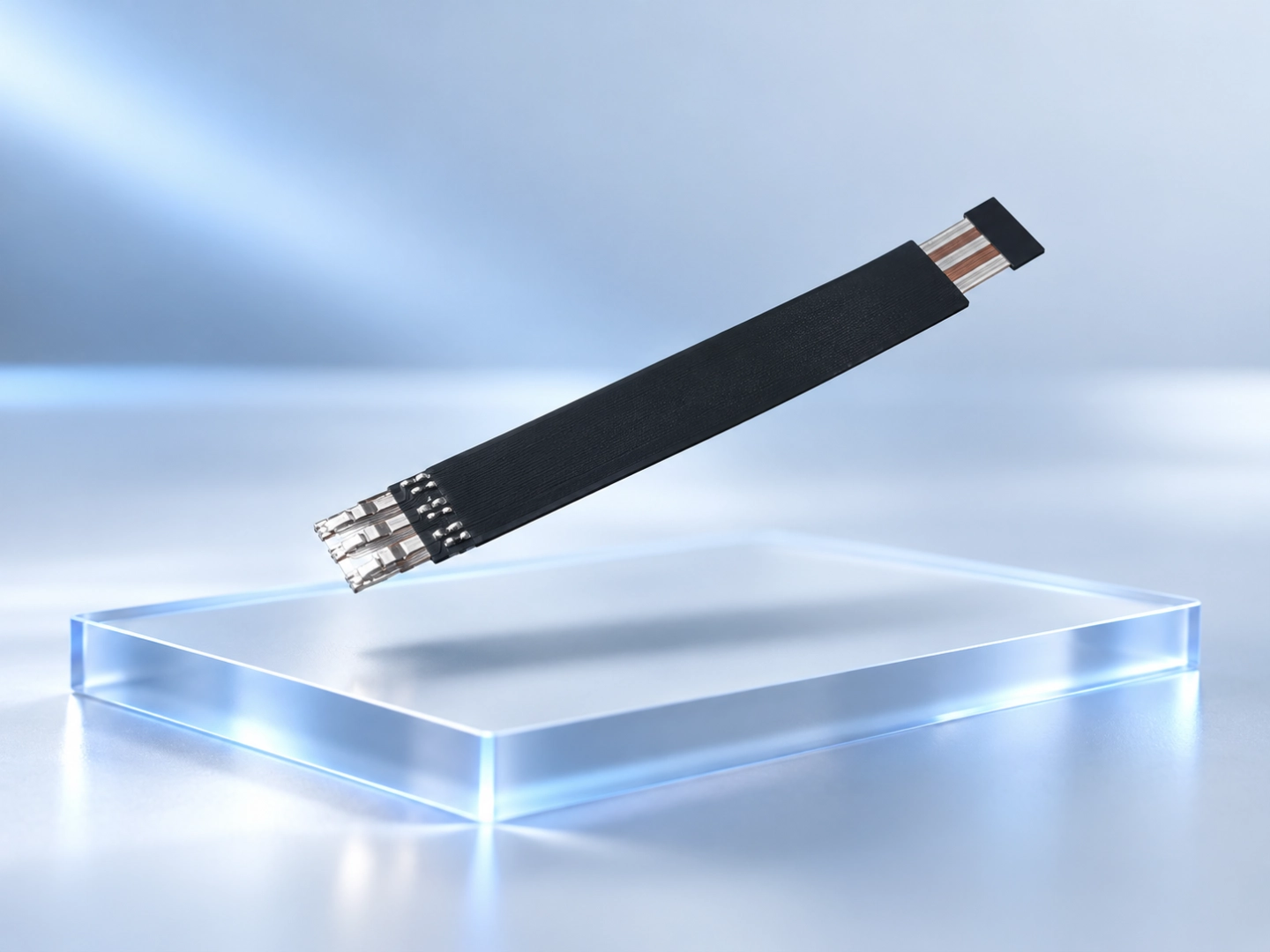
FFC stands for Flexible Flat Cable. This is a flat, flexible cable with parallel conductors.
FFC connections enable compact connections between electronic assemblies and are frequently used when installation space is limited or when traditional wire harnesses would be structurally disadvantageous.
In a crimp connection, a metal contact is mechanically pressed onto a conductor using a suitable tool.
In IDC – Insulation Displacement Connection – the insulated conductor is inserted into an insulation displacement contact. The contact penetrates the insulation and establishes the electrical connection to the conductor.
Which technique is better suited depends, among other things, on the cable structure, manufacturing process, and application.
Board-to-board connectors directly connect two printed circuit boards (PCBs).
Depending on their design, the PCBs can be arranged, for example, parallel, perpendicular, or in another defined position relative to each other. They are particularly suitable for compact electronic assemblies and modular device concepts.
Important criteria include current and voltage ratings, number of positions, pitch, contact resistance, installation space, mounting type, and number of mating cycles.
Depending on the application environment, temperature, vibration, humidity, or specific mechanical requirements may also be decisive.
Cable lugs establish a permanent and mechanically resilient connection between a conductor and a connection point.
They are used in power supplies, control cabinets, machinery, vehicles, and other applications involving wired electrical connections.
Cable glands provide a secure way to feed cables into housings or control cabinets. Depending on the design, they perform functions such as strain relief, sealing, and mechanical protection.
The type of cable gland required depends on factors such as cable diameter, housing, environmental conditions, and the required protective effect.
The quality of a crimp connection significantly depends on proper processing. The contact, conductor, and crimping tool must be matched.
Particularly in series applications, a defined crimping process contributes significantly to reproducible electrical and mechanical properties.
Yes. We assist you from the technical pre-selection of suitable connection solutions, through coordination with ZeB and the respective manufacturers, up to the procurement of samples and subsequent volume supply.
We can also assist you with re-designs or in finding alternatives to existing components.
Connectors and PCB Connections
Connectors enable detachable electrical connections and are available for very different structural requirements.
PCB connectors link printed circuit boards with cables or other electronic assemblies. For compact connections between multiple PCBs, board-to-board connectors can be used.
Crucial factors for selection include the number and arrangement of contacts, pitch, current and voltage capacity, installation direction, and available height.
The number of intended mating cycles and the mechanical load within the application should also be taken into account.
FFC – Flexible Connections for Compact Assemblies
Flexible Flat Cables (FFC) enable space-saving electrical connections between assemblies. Due to their flat design, they are particularly suitable for applications with limited installation space or moving or structurally demanding connection paths.
Typical applications can be found in displays, control units, industrial electronics, and compact electronic assemblies.
In addition to the number of poles and pitch, cable length, contacting, installation situation, and mechanical stress play an important role in the selection.
Crimp, IDC, or Screw Terminal?
The type of contacting also has a major influence on the design, production, and reliability of an electrical connection.
In crimp technology, a contact is mechanically pressed onto the conductor. With correct design and processing, a permanently reliable electrical and mechanical connection is created.
IDC technology (Insulation Displacement Connection) allows for the contacting of insulated conductors without prior stripping and can therefore offer processing advantages, particularly in corresponding series and cable concepts.
Screw terminals, on the other hand, enable detachable conductor connections and are used in industrial applications, power supplies, and control systems, among others.
Which technology makes sense depends not only on the electrical requirements but also on the conductor, quantity, manufacturing process, and subsequent use.